Lone Worker Safety in India: What the Law Requires and How a Panic Button App Delivers It
Every day, thousands of workers across India step into hotel corridors, construction sites, and sprawling facilities complexes with no colleague nearby and no reliable way to call for help if something goes wrong. For employers, this is not merely a moral concern; it is a legal exposure that existing passive measures simply do not address. India’s occupational safety framework, spanning the Factories Act of 1948, the Building and Other Construction Workers Act of 1996, and the Occupational Safety, Health and Working Conditions Code of 2020, places clear obligations on employers to provide active means of distress communication for isolated workers. Yet most organizations still rely on periodic check-in calls or supervisory walkthroughs that would never satisfy a compliance audit, let alone a courtroom.
This analysis examines precisely what Indian law requires, where the gaps in common practice lie, and how a red panic button app closes those gaps at a fraction of the cost of dedicated hardware. Sector by sector and statute by statute, you will see how a GPS-enabled smartphone solution maps onto each legal obligation, and why smart employers are treating compliance as the starting point rather than the finish line.
Who Counts as a Lone Worker in India
A lone worker, under any credible occupational safety framework, is someone who performs tasks without direct supervision or a co-worker within immediate calling distance. In India, this condition is not exceptional; it is routine across three sectors that collectively employ tens of millions of people.
Hotel housekeeping staff work solo through guest-room floors for hours at a time, with no colleague in sight and no supervisor within earshot. Construction workers operate alone during foundation work, confined-space inspections, and night-shift equipment maintenance on sites that may span several acres. Facilities management personnel conduct late-night security and maintenance rounds through commercial complexes, data centres, and industrial parks, often the only person on an entire floor or zone.
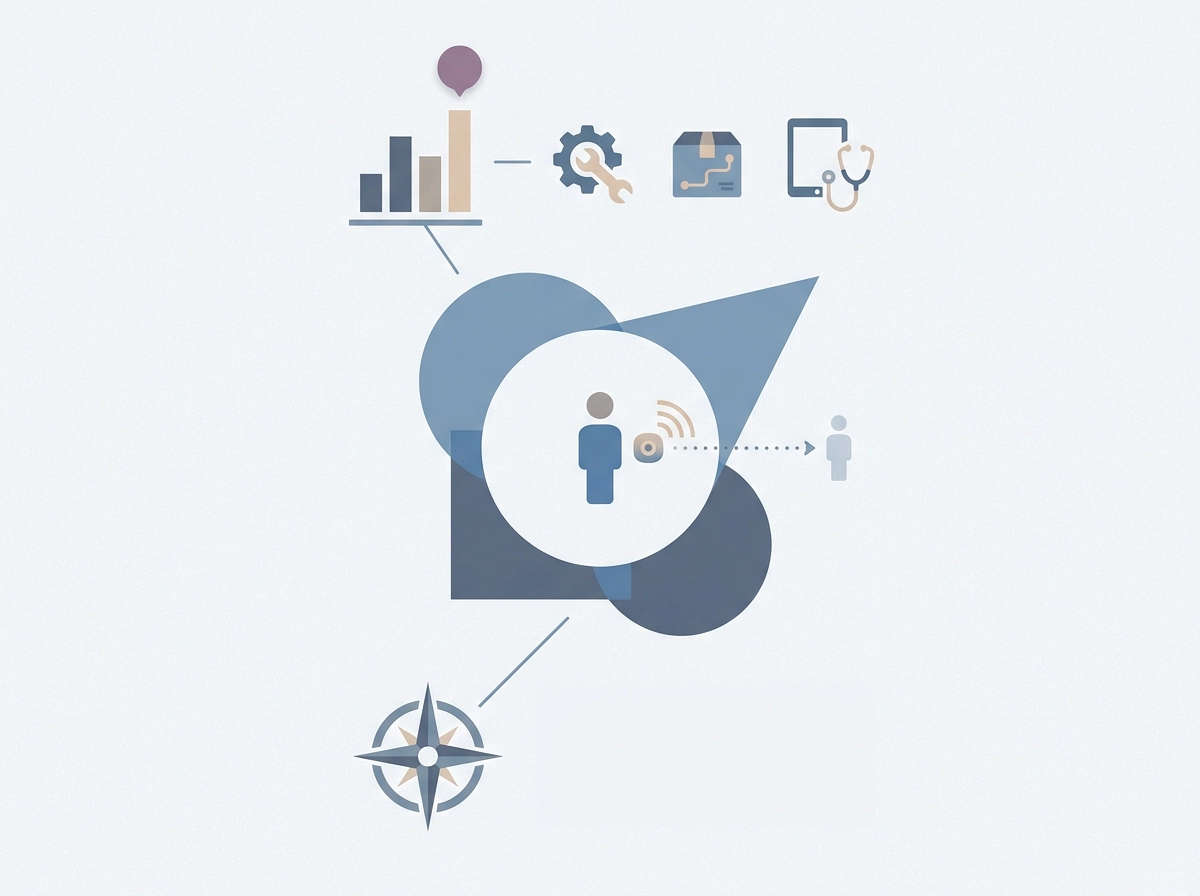
India’s formal hospitality sector employs millions of workers, construction represents one of the country’s largest labour forces, and facilities management is among the fastest-growing service sectors in the economy. Across all three, isolated working conditions are not exceptions to the norm; they are the norm.
Isolation constitutes a distinct occupational hazard for three compounding reasons. First, emergency response is delayed because no colleague can observe an injury as it happens. Second, the absence of a witness means incidents go unreported until a supervisor notices an absence. Third, without immediate supervision, the worker has no recourse beyond whatever personal means of communication they happen to carry. Standard collective worksite rules, written for environments where co-workers are present, do not address these risks.
Critically, lone worker status is situational, not contractual. A hotel housekeeper on a full-time employment contract, covered by every applicable HR policy, becomes a lone worker the moment she begins a solo floor shift. Her contract does not change her risk exposure; her physical circumstances do. Any safety framework that ignores this distinction will fail her precisely when she needs it most.
This analysis examines the three statutes most directly applicable to these sectors, the Factories Act 1948, the BOCW Act 1996, and the OSH Code 2020, and maps each statutory obligation onto what a check-in system your team will actually use every shift delivers in practice.
The Factories Act, 1948: Duty of Care for Isolated Workers
Section 7A of the Factories Act, 1948 establishes that every occupier must ensure, “so far as is reasonably practicable,” the health, safety, and welfare of all workers while at work in the factory. The statutory language contains no carve-out for physical separation. A worker monitoring equipment alone on a night shift carries the same legal protection as one standing beside their supervisor on the main floor.
The Scope of the Duty
The Act imposes detailed obligations on cleanliness and ventilation, and Chapter V’s welfare provisions extend further. Indian courts have interpreted the occupier duty to cover any hazardous working condition, not merely those visible on a central factory floor. Isolation qualifies as such a condition because it delays emergency response and removes the witness function that collective workplaces provide.
Understanding why this is essential for cleaning and housekeeping staff working alone illustrates precisely how isolation converts an ordinary task into a recognised safety concern: the hazard is not the task but the absence of immediate help if something goes wrong.
The Written Policy Requirement
Section 7A(3) mandates a written statement of the occupier’s general safety policy, including the organisational arrangements for carrying it out. The compliance gap here is often overlooked: if an employer has no documented lone worker procedure, that absence is itself a breach, independent of whether any incident has occurred. A logbook or verbal check-in arrangement does not constitute a documented policy; it is, at best, an informal practice that an inspector can reject.
Enforcement in Practice
The statutory duty is active, documented, and enforceable before any worker is harmed.
The BOCW Act, 1996: Construction Sector Lone Worker Protections
Where the Factories Act sets a general duty of care, the BOCW Act goes further: it is the only Indian statute that comes close to prescribing a specific lone worker safety device requirement in construction settings.
The Building and Other Construction Workers (Regulation of Employment and Conditions of Service) Act, 1996, along with its Central Rules, explicitly mandates rescue and communication equipment for construction worksites. Chapter XIII of the Central Rules addresses excavation, tunnelling, and confined-space operations in granular detail, covering safety provisions for workers who may become trapped or isolated during these high-risk activities. The Central Rules’ provisions for excavation and confined-space work impose safety communication requirements for isolated workers, requirements that a smartphone-based distress alert can satisfy.
India’s construction safety rules address outcome, can the worker raise an alert that reaches a responsible person?, rather than mandating specific hardware. This functional framing matters enormously when evaluating whether a smartphone-based solution satisfies the obligation. Employers assessing why construction workers need emergency alert systems will find the BOCW Central Rules the direct legal basis for that requirement.
The enforcement mechanism reinforces the compliance stakes. State-level BOCW Welfare Boards are empowered to fund and mandate worker safety equipment. Employers registered under the Act who fail to provide stipulated safety gear face fines and, critically, suspension of registration, which can halt operations entirely.
The practical triggers extend beyond formal excavations. Foundation work, night-shift equipment maintenance, and solo security patrols on large sites all constitute conditions where a worker operates in isolation with meaningful injury risk and no immediate colleague within calling distance.
The OSH Code, 2020: India’s Updated Framework and What It Changes
The BOCW Act addresses construction specifically, but the OSH Code, 2020 fundamentally reshapes the compliance landscape for every Indian employer, including those in sectors that previously operated outside formal occupational safety regulation.
The Code consolidates multiple central labour laws including the Factories Act and the BOCW Act into a single unified framework, and is expected to extend coverage to smaller establishments, including hotels and commercial facilities, subject to state-level implementing rules. Hotels, commercial facilities, and facilities management firms that were not previously subject to the Factories Act now fall squarely within scope. For these sectors, the OSH Code is not an incremental update; it is the first time a comprehensive statutory safety obligation has applied directly to them.
Section 6 of the OSH Code establishes a universal duty of care, requiring every employer to ensure workplaces are free from hazards likely to cause injury and to maintain, as far as is reasonably practicable, a safe working environment. Critically, this duty requires documented risk assessment, not merely good intentions. Working in isolation is a condition that elevates hazard severity under the risk-assessment framework the Code mandates, because delayed emergency response and absent supervision are recognised compounding factors.
The Code’s contractor liability provisions carry particular weight for facilities management. Under Sections 45 to 58, where housekeeping or security staff are engaged through a contractor, both the contractor and the principal employer share responsibility for worker safety measures. Neither party can disclaim the obligation by pointing to the other’s contract.
The Code also creates a dedicated category of inter-state migrant workers, who frequently fill lone-shift roles in hospitality and construction. Their linguistic isolation compounds physical isolation; a distress solution that depends on verbal communication fails this cohort. Technology-based alerts that require only a single tap address that gap directly.
State governments are required to frame implementing rules under the Code. As researchers note, the Code offers a genuine opportunity to convert fragmented regulation into coherent worker protection.
Why Passive Measures Fail the Legal Test
Recognising the obligation is only half the equation. The harder question is whether what most Indian employers currently do actually satisfies it, and the honest answer is no.
The structural flaw in passive measures
Buddy systems, periodic supervisor call-rounds, and fixed telephones on a corridor wall share a common defect: they require someone other than the worker to initiate or enable the rescue chain. The BOCW Central Rules’ distress-signal requirement is worker-centric by design. The signal must be something the worker raises, not something a supervisor eventually gets around to noticing. A check-in call that never happens because the supervisor was occupied, or an emergency phone three locked doors away from a housekeeper working a solo floor, fails this test entirely regardless of how it looks on a compliance checklist.
What the statutory language requires
The statutory language of Section 7A, ensuring safety “so far as is reasonably practicable”, implies an active obligation, not a passive one. Providing a communication facility in the general vicinity of a hazard does not discharge the duty if the specific worker in the specific situation cannot access it. The legal standard is whether the worker, at the moment of emergency, had an unobstructed means of raising an alert. A telephone in a corridor fails that standard when the worker is in a locked room on the same floor.
Why hardware alternatives are not the answer
Dedicated lone worker safety devices carry a significant per-unit cost before accounting for maintenance, battery replacement, and inventory management. For a hotel operating 40 housekeeping staff across rotating shifts, fleet deployment is a capital decision most mid-size employers defer. Beyond cost, workers resist carrying a second device, so uptake is low even where devices are procured. The cost and uptake barriers of dedicated hardware are examined in the business case below.
The logbook problem
A logbook check-in system documents that a process existed. It does not transmit the worker’s location, does not escalate automatically when a check-in is missed, and generates no distress signal at all. Documenting compliance theatre is not the same as providing a safety net.
What the Law Actually Means by a Means of Raising a Distress Signal
Having established that passive measures fail the active-alert standard, the question becomes precise: what does “a means of raising a distress signal” actually require in legal terms?
India’s construction safety rules address outcome, can the worker raise an alert that reaches a responsible person?, rather than mandating specific hardware. A klaxon, a radio, and a smartphone panic button app all pass the same test if they deliver that outcome. The statute is indifferent to the hardware.
A technology-neutral reading of the statutory distress-signal obligation, consistent with the OSH Code’s risk-based framework, suggests three functional requirements:
- The worker must be able to activate the signal unilaterally and instantly, without depending on a third party to initiate it.
- The signal must reach a responsible person who has both the authority and the means to dispatch assistance.
- The system must convey the worker’s location at the moment of the alert.
A smartphone panic button app that delivers one-tap SOS alerts with live GPS coordinates to a named supervisor or emergency contact satisfies all three. It replicates the functional outcome of a hardware red panic button without the procurement cost. What You Get Out of the Box on Protect Smartly illustrates how these features are configured for a lone worker deployment.
The GPS gap is a liability gap
An app that sends an SOS alert but transmits no GPS location data does not fully satisfy the functional test. The signal was raised and the responsible person notified, but without location the duty to dispatch effective help cannot be discharged. The standard is not merely “an alert was sent.” It is “an alert was sent and acted upon effectively.” Location data is what converts notification into actionable response.
How a Panic Button App Maps onto Each Legal Obligation
With the functional test established, the mapping to specific statutory obligations becomes straightforward.
Factories Act Section 7A (general duty of care). The duty to ensure worker safety does not require a supervisor to be physically present; it requires that the means of ensuring safety be in place. A panic button app with live location sharing maintains a continuous, monitored connection between an isolated worker and their supervisor, satisfying Section 7A’s active obligation even when direct oversight is structurally impossible, such as a housekeeper working a solo floor at 2 a.m.
BOCW Central Rules (distress signal requirement). A one-tap SOS that immediately transmits GPS coordinates to designated contacts is a direct functional fulfilment of the distress-signal obligation. No additional hardware is required beyond the worker’s existing smartphone, eliminating the procurement barrier that has left many BOCW-registered sites non-compliant.
OSH Code Section 6 (risk assessment and control measures). Deploying a lone worker safety app constitutes a documented control measure for the isolation hazard. Critically, the app’s timestamped alert log serves as an audit trail for inspectors, converting what is otherwise an abstract policy commitment into verifiable, exportable evidence of active risk control. For employers uncertain about feature requirements, related safety guides on the ProtectSmartly panic button app set out the minimum capability set that satisfies the OSH Code’s proportionality standard.
Contractor and principal employer shared liability (OSH Code). Apps like ProtectSmartly deploy to contracted staff’s personal smartphones at no hardware cost, meaning both contractor and principal employer can demonstrate active safety provision for every lone worker, regardless of employment structure. Shared liability no longer requires a shared device budget.
State-level check-in and monitoring requirements. The check-in ping feature converts a passive logbook into an active, time-stamped digital record. If a worker misses a scheduled check-in, the supervisor receives an automated notification with the worker’s last known location, satisfying state-level monitoring provisions that a paper register cannot replicate.
The Business Case: Liability, Cost, and Operational Fit
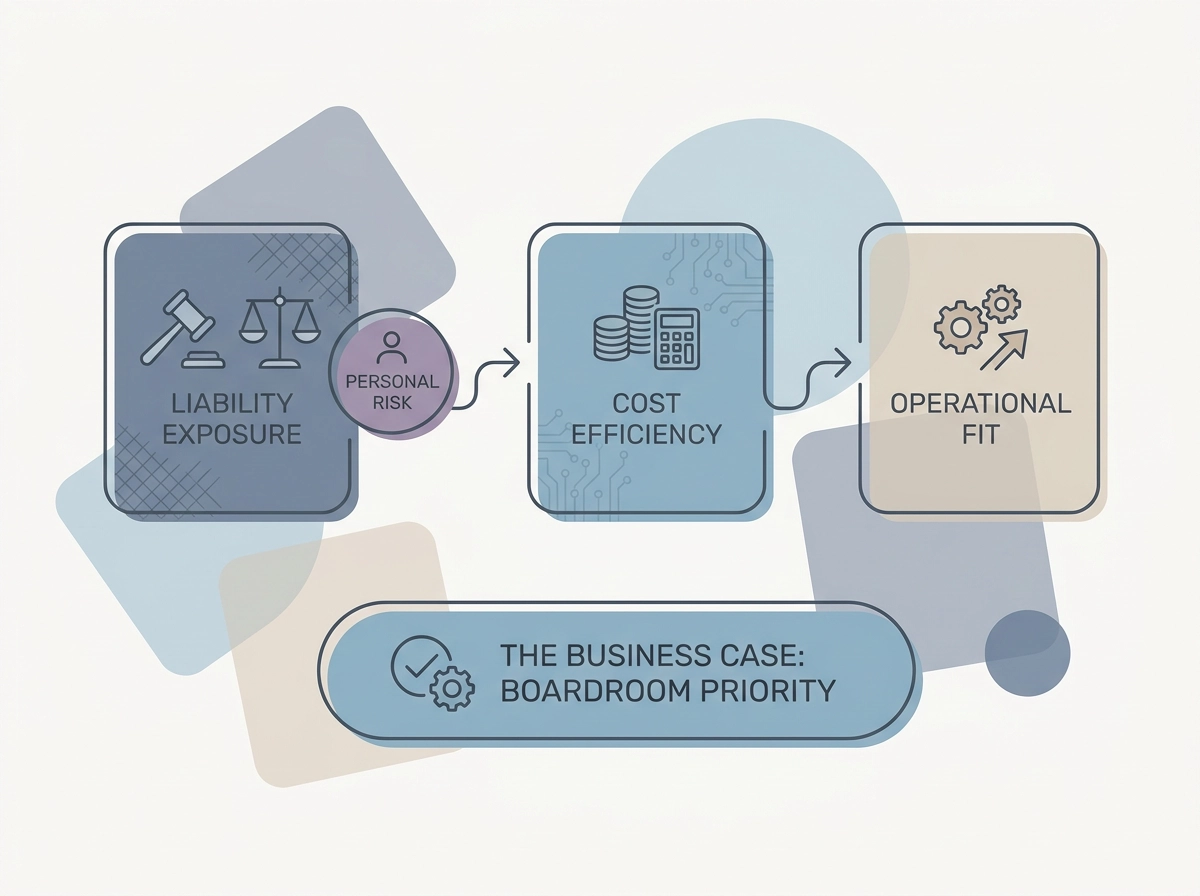
Legal compliance maps neatly onto the statute; the business case is what converts compliance from an aspiration into a boardroom priority.
The liability exposure is personal, not just corporate. Section 92 of the Factories Act establishes criminal penalties, including imprisonment and fines, for occupiers where a contravention causes worker injury or death. Civil compensation claims under the Employees’ Compensation Act compound that exposure, and in hospitality and facilities management, a publicised fatality triggers licence reviews and contract terminations with institutional clients. The financial consequence of a single incident without a documented distress-signal provision almost certainly exceeds any safety investment made in advance.
Hardware costs create the compliance gap. As noted earlier, logbook systems prove process, not protection. Dedicated GPS lone worker devices carry material per-unit costs in the Indian market, plus ongoing maintenance and inventory management overhead. For employers with large part-time or shift-based workforces, fleet deployment is a capital decision many defer indefinitely. That deferral is not a cost saving; it is a larger, unquantified liability sitting on the balance sheet.
ProtectSmartly removes the procurement barrier entirely. Workers install the app on smartphones they already carry. The GPS SOS and check-in features are operational immediately, with no procurement cycle, no device inventory, and no maintenance overhead. The mission behind the product, visible on what we stand for, is precisely this: accessible safety infrastructure that requires no hardware investment.
Insurance and documentation. Documented lone worker safety protocols, including exportable alert logs, strengthen an employer’s position under employer liability insurance policies and in post-incident civil proceedings.
Operational fit is the final argument. A smartphone panic button app sits inside the communication infrastructure these industries already use: supervisor WhatsApp groups, HR mobile numbers, call trees. Adoption requires a behaviour change, not an infrastructure change.
Sector-Specific Considerations: Hospitality, Construction, and Facilities Management
The compliance case and cost analysis apply differently depending on the sector. Each presents a distinct isolation profile, a different statutory trigger, and a different practical deployment challenge.
Hospitality
Hotel housekeeping staff rank among the most consistently isolated workers in India’s formal economy. They work alone in guest rooms, often on floors with poor corridor visibility and no fixed emergency infrastructure. A distress situation can develop without any colleague nearby to witness or respond. The OSH Code’s expanded scope, extending to commercial establishments beyond traditional factories, brings most Indian hotels within formal compliance scope for the first time. Understanding why hotel staff need enhanced safety goes beyond duty of care: it is now a statutory obligation with enforcement consequences.
Construction
The BOCW Central Rules’ distress-signal requirement applies most directly here, and the severity risk is highest. A worker alone in an excavation, at height, or in a confined space can sustain a fatal injury within minutes if no alert reaches a supervisor. On large or multi-level sites, GPS location transmission is not a convenience; it is operationally decisive.
Facilities Management
Contract-based FM workers conducting night-shift rounds in commercial complexes, data centres, and industrial parks are typically employed through contractors, which activates the OSH Code’s shared liability provisions for both contractor and principal employer. Because this workforce is fragmented across dozens of sites and engagements, employer-issued hardware is not a practical solution. A panic button app deployable to workers’ personal smartphones is the only scalable lone worker safety solution for this employment model.
State-Level Variation and App Feature Requirements
State-level implementing rules vary. Employers operating across multiple states should review their own state’s published OSH rules and confirm their chosen system generates timestamped, GPS-tagged records.
Not all red panic button apps meet this bar. Verify three things before deployment: real-time GPS coordinates in the SOS alert, automated supervisor notification on missed check-ins, and an exportable alert log for regulatory inspection. These features distinguish a compliant lone worker safety app from a general-purpose messaging tool.
Implementing a Lone Worker Safety App: Practical Steps for Indian Employers
Once you have confirmed which features your chosen app must deliver, implementation follows a clear five-step sequence.
Step 1: Conduct a lone worker risk assessment. Map every role where a worker performs tasks without a co-worker within calling distance. For each role, document the isolation duration, the hazards present, and the current means of raising a distress signal. Under the OSH Code, this assessment is a statutory requirement, not optional groundwork; it is also the document that justifies your choice of worker safety solutions to an inspector.
Step 2: Map your statutory obligations. The applicable statute determines the minimum feature set your lone worker safety app must deliver. Factories Act-covered manufacturers need documented communication protocols; BOCW-registered construction employers must satisfy the Central Rules’ distress-signal requirement; the OSH Code applies to all covered employers regardless of sector. Check your state’s published rules for any electronic monitoring provisions before finalising your app configuration.
Step 3: Deploy ProtectSmartly and configure emergency contacts. Install the app on workers’ smartphones, assign each worker a named supervisor as their emergency contact, and set check-in intervals to match your shift pattern. If you want to understand how an SOS app works before rollout, the answer is straightforward: one tap sends a GPS-tagged alert to the designated contact instantly, with no hardware procurement required.
Step 4: Train workers on the one-tap SOS. Fifteen minutes is sufficient. Demonstrate the red panic button, the check-in ping, and the supervisor notification that follows an SOS. For migrant workers with limited Hindi or English literacy, use visual walkthroughs rather than verbal instruction, and confirm comprehension before the worker’s first solo shift.
Step 5: Integrate the alert log into your safety documentation. Export the app’s alert and check-in records monthly and file them alongside your statutory safety registers. A single exportable log satisfies factory inspector requirements, BOCW Welfare Board scrutiny, and employer liability insurer documentation requests simultaneously, converting routine app usage into a continuous compliance record.
Conclusion: Compliance Is the Floor, Not the Ceiling

Once the five implementation steps are in place, the remaining question is whether compliance is the destination or the starting point.
India’s three-layer framework, the Factories Act 1948, the BOCW Act 1996, and the OSH Code 2020, does not leave employers room for interpretation on the core obligation: every lone worker must have an active, worker-controlled means of raising a distress signal. Passive measures, logbooks, corridor phones, periodic supervisor calls, fail this test because they depend on third-party availability rather than the worker’s own ability to summon help. That distinction is not procedural; it is the difference between a defensible safety system and a liability waiting to be triggered.
A smartphone panic button app with one-tap SOS and live GPS transmission is not a workaround for employers who cannot afford hardware. It is a direct, functional fulfilment of what each statute requires. The preceding sections establish the statutory basis in detail.
The financial exposure from a single unprotected incident is substantial. The financial exposure is quantified in the business case section above.
The actionable takeaway is immediate: conduct a lone worker risk assessment this month, map your applicable statutes, and deploy ProtectSmartly as your documented control measure. Setup takes under an hour. Compliance and safety benefits begin on the first shift.
For employers who want to go further, ProtectSmartly’s family circle notifications, live location sharing for field teams, and scheduled check-in pings extend the same safety infrastructure to every worker operating away from direct supervision, converting a compliance requirement into a genuine operational safety culture.